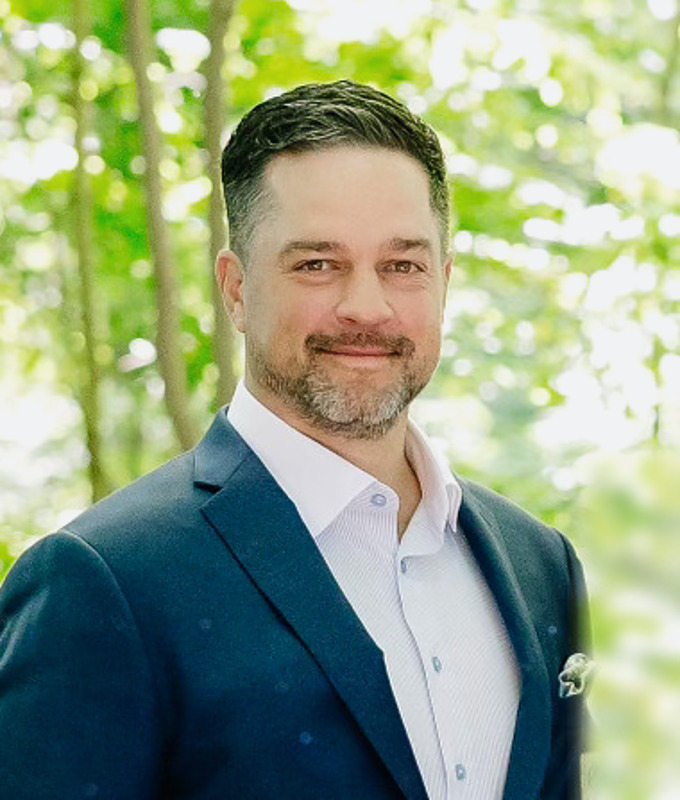
About Nathan Parkhouse

Built and sold a 20-year advisory practice. Now helping other owners build the structural capacity to grow beyond themselves.

Nathan Parkhouse, CFP®, CIM®, FMA — Founder, Nathan Parkhouse Advisory

I

The build

I built Parkhouse Financial from the ground up over nearly 20 years. Like most founders, I started by being central to almost everything. That made sense at the beginning. Clients trusted me. Decisions came to me. The team looked to me. The business grew because I pushed it forward.

But as the practice grew, the same structure that helped build the business started to create a ceiling. More clients meant more complexity. More staff meant more decisions. More opportunity meant more demand on my time. Growth was happening. Too much of it was still being carried personally by me.

Nathan Parkhouse

"The shift that changed everything wasn't a hire or a system. It was redesigning how the practice actually worked."

II

The shift

The answer wasn't working more hours. It wasn't another productivity system. And it wasn't just hiring again.

The shift came from redesigning the structure of the practice itself. That meant building a strong number two, starting with hiring someone straight out of school and investing in their development over four years until they were licensed and capable of handling everything short of direct advice. It meant deliberately transferring client relationships across the team, not stepping back and hoping the team would fill the gap. And it meant explicitly redefining my own role: moving out of the centre of daily operations and into the work that only I could do.

Over time, the practice became more team-led. Decisions didn't always need to route through me. Clients were supported by more than just the founder. The business could keep growing with less daily dependence on my personal involvement.

III

The sale — and what it confirmed

Eventually, the practice sold. That experience confirmed what the structural work was actually worth. A practice that can run without its founder is worth more, transfers more cleanly, and provides genuine optionality. Not just at exit, but from the moment the structure is in place.

That arc wasn't linear, and I'm not going to pretend it was. But it produced a perspective on this problem that isn't theoretical. It's built from direct experience on both sides of the structural ceiling.

How this work is approached

A few things I've learned that don't change.

The number-two role comes first

Every other structural change depends on having one person who can hold the operation when the founder isn't in the room. Without that person in place, hired, developed, and trusted with real authority, everything else is working around a gap at the centre of the architecture.

Client relationship transfer is the highest-value work

It's the moment the practice stops being synonymous with the founder. Revenue becomes more defensible. Enterprise value becomes real. And the founder experiences, often for the first time, what it feels like to have the business function without them at the centre of every important relationship.

The founder's role has to be explicitly redesigned, not just reduced

Most owners stop short. They reduce their involvement without ever naming what they're moving toward. The shift that actually works isn't "do less." It's "do differently, and say so out loud." Clarity at the top gives the structure something to organize around.

The resistance is structural, not personal

The discomfort that shows up when decision rights are named specifically, when authority has to be given up, when the escalation path changes: that's not weakness. Structure is what makes it safe to let go — not trust alone.

Professional background

Credentials

CFP®

Certified Financial Planner

CIM®

Chartered Investment Manager

FMA

Financial Management Advisor

Built and sold Parkhouse Financial, an independent advisory practice developed over nearly 20 years.

Start the conversation

If the practice is growing but capacity isn't, start here.

Seven questions. Under five minutes. A clear read on where your structure is limiting what comes next.