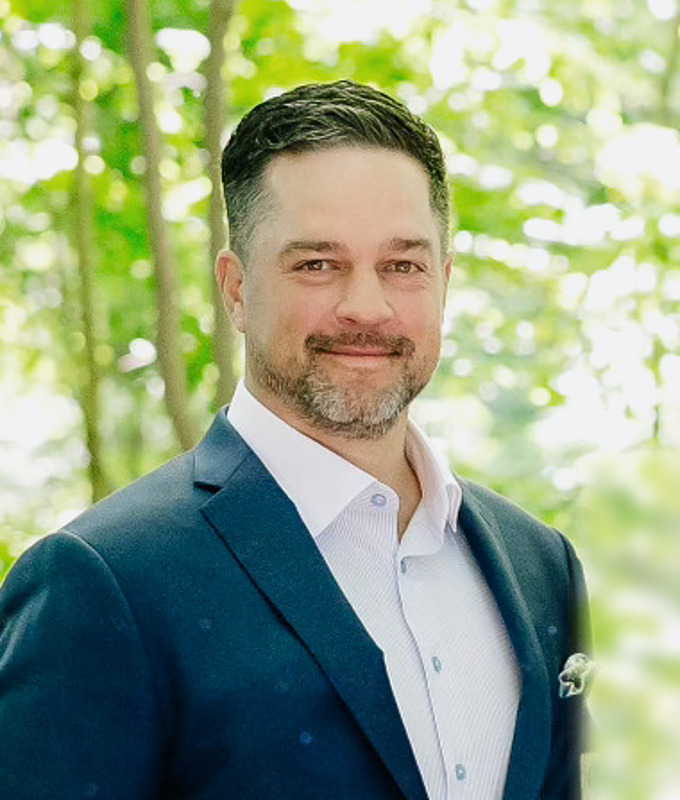
Nathan Parkhouse Advisory

Your practice is growing.
Your capacity isn't.

The work that would actually move your practice forward keeps getting pushed aside. The day is already full before it starts. That's not a time problem. It's a structural one.

Nathan Parkhouse · CFP® · CIM® · FMA · Built and sold a 20-year advisory practice

Most advisory practices that hit a growth ceiling aren't being held back by market conditions, talent, or effort. They're being held back by structure. Specifically, a structure that was never deliberately redesigned to carry growth beyond the founder.

The practice added clients. Added staff. Added complexity. But the way the firm works still revolves around the owner. Decisions that belong at the team level keep surfacing at the top. Client relationships that should belong to the practice still belong to you personally. The work that would actually grow the business: ideal client development, COI relationships, strategic leadership. It keeps getting displaced by everything the structure hasn't been designed to hold.

Clients trust the firm. But they trust you personally. The practice hasn't been introduced as the relationship. If you stepped back tomorrow, your top relationships would notice immediately.

The team is capable. But decisions still route back to you. Escalation is the default, not the exception.

Revenue has grown. Your ability to pursue more of it hasn't. Protected prospecting time doesn't exist because the day is already full.

You can take time away. But you can't fully disconnect. You know it. The business waits for you.

What staying here costs.

The ceiling doesn't hold still. Every quarter the structure stays as-is is another quarter of compounding cost. Not just in effort, but in revenue not pursued and enterprise value quietly deteriorating.

Revenue not pursued

Ideal client opportunities are lost when the founder doesn't have the bandwidth to pursue them. The work that would move the practice forward gets displaced by the work that won't wait.

Enterprise value

A practice that runs through the founder isn't a business — it's a high-paying job with a client list. A business generates revenue through its structure. A practice generates revenue through its founder. The difference compounds: one builds enterprise value every quarter, the other quietly erodes it. Staying here isn't neutral. It's a choice to keep the ceiling where it is.

Team erosion

Without structural clarity, the best people leave. The ones who stay self-select for a low-accountability environment. Rebuilding takes longer than fixing would have.

The ceiling hardens

What starts as a capacity constraint becomes the new normal. Growth stops feeling difficult and starts feeling impossible. Getting out of that is harder than getting the structure right when the window was open.

What structural advisory addresses

The architecture of the practice itself.

Structural advisory works on the four dimensions that determine whether a practice can carry growth independently, or whether it routes everything back to the founder by design.

Client Relationships

Whether clients experience the firm as the relationship, or whether trust still sits personally with you. That matters for growth, continuity, and transferable value.

Founder Capacity

How your time and attention are actually allocated, and whether enough capacity exists for the work that grows the practice, or whether it's fully consumed by the work that maintains it.

Team Structure

Whether roles, accountabilities, and a functioning number-two exist — and whether the team has been set up to carry real ownership, or set up to depend entirely on your presence.

Decision Rights

How decisions are made, who makes them, and whether the right calls are being made at the right level, or whether everything meaningful waits for you.

Who this is for

Growth-minded owner-operators who've hit a structural ceiling.

This work is for founders of advisory practices — RIAs, independents, broker-dealers, hybrids. Founders who are actively scaling: adding people, adding clients, building something larger. They've built something real. The opportunity ahead is meaningful. What's limiting the next stage of growth isn't ambition or effort.

It's structure.

You want more time for growth, but the week is consumed before it starts.

You're still the primary relationship for clients who should know and trust the team.

You have capable people, but decisions still keep coming back to you.

You've hired. But you haven't fully transferred ownership.

You know what needs to change. You haven't had the structural runway to change it.

You can take time away — but you can't fully disconnect without wondering what stalls.

If the practice is growing but you're still the force holding too much of it together, the issue isn't personal. The issue is structure. And structure can be redesigned.

The process

Six steps. Structured from the start.

1

Growth Capacity Index

A seven-question self-assessment. Surfaces where the current structure is limiting what's next. Takes under five minutes.

2

Fit Call

A direct 30-minute conversation — not a pitch. An honest read on whether there's a structural problem worth solving together.

3

Growth Capacity Diagnostic

A structured deep-dive across four dimensions: client relationship distribution, founder capacity and time, team readiness and structure, and decision rights.

4

Analysis

The findings synthesized into a clear structural picture: where the architecture is holding, and where it's the constraint.

5

Delivery Session

A live 60–90 minute session. Results presented and discussed in real time. Not sent ahead. The session itself is where the thinking happens.

6

Advisory Engagement

For founders who want to act on what the Diagnostic surfaces: a structured retainer focused on building the capacity the practice needs to grow beyond its current ceiling.

Start here

Seven questions. Under five minutes.
A clear read on where your structure is limiting what's next.

The Growth Capacity Index surfaces the structural constraints that tend to be hardest to see from inside the practice. Your responses go directly to Nathan. No marketing lists. No automated sequences.

About Nathan

Built it.
Redesigned it.
Sold it.

Nathan spent nearly 20 years building and ultimately selling an independent advisory practice. He didn't just advise on structural change. He lived it. Hired and licensed team members from scratch. Built toward full operational independence. Navigated a sale.

The value of that experience isn't a polished success story. It's that Nathan knows what the structural problems actually feel like from the inside.

CFP®CIM®FMA
Ready to start?

See where your structure is limiting what's next.

Take the Growth Capacity Index above, or book a direct 30-minute fit call. Either way, the conversation starts with an honest read. Not a pitch.